
2026-08-27 · Rick Harlan
GFCI Outlet Installation Requirements for Elgin Bathrooms and Kitchens
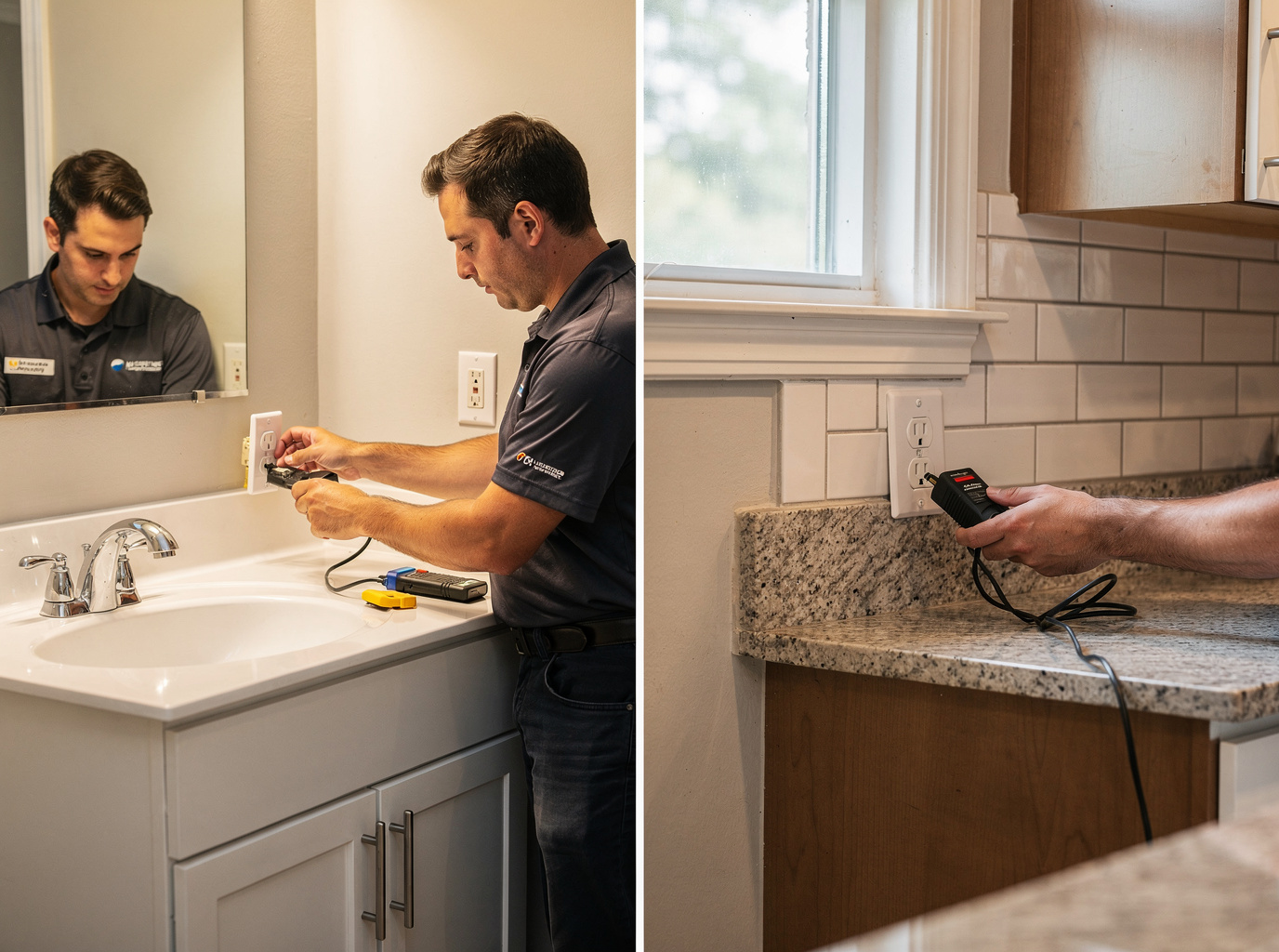
GFCI outlets must be installed within 3 feet of any sink in Elgin bathrooms and kitchens to comply with adopted NEC standards in Kane County. This protects against ground faults common in moisture-prone spaces. Many homes in Downtown Elgin and the Near West Side were built before these rules applied, so upgrades often involve replacing standard receptacles during renovations.
Understanding GFCI Requirements in Elgin Homes
Kane County enforces electrical codes that mandate GFCI protection in wet locations. Bathrooms need protection at every receptacle, while kitchens require it for outlets serving countertops and within reach of water sources. In neighborhoods like the East Side and West Side, pre-1970s housing stock frequently lacks these devices, leading to exposed wiring when older two-prong outlets are swapped. Cold winters in the humid continental climate increase indoor humidity from showers and cooking, raising shock risk if protection is missing. Electricians check for proper grounding and test trip functions on every install. Homes near Lords Park or the Elgin Public Museum often share similar vintage wiring challenges that affect upgrade scope.
Bathroom Installation Standards
Bathroom GFCI outlets must sit no farther than 36 inches from the sink edge and serve all receptacles in the room. In Elgin residences, this includes spaces near tubs or showers where steam adds conductivity. Installers run new 12-gauge wire from the panel when existing circuits lack capacity, especially in Spring Creek area homes with aluminum wiring from the 1960s. The device resets at the outlet itself rather than the breaker for quick homeowner access. Testing occurs after installation by pressing the test button and confirming power cuts. These steps prevent nuisance trips during humid summers when dehumidifiers run on the same circuit.
Kitchen Outlet Placement Rules
Kitchen GFCI protection covers all countertop outlets and any within 6 feet of a sink edge. In older Elgin kitchens, this often means adding multiple protected receptacles during remodels because original circuits served only two or three outlets total. Dedicated circuits for microwaves or disposals stay separate from GFCI lines to avoid overloads. Homes in the West Side frequently need panel capacity checks before adding these outlets, as original 60-amp services cannot support modern loads. Installers label each new outlet clearly and verify spacing meets code distances from water sources. This approach handles the hot summers that increase air conditioner and appliance use simultaneously.
Challenges in Older Elgin Neighborhoods
Many properties in Downtown Elgin and the Near West Side feature knob-and-tube or cloth-covered wiring that complicates GFCI retrofits. Electricians often extend circuits from the main panel rather than relying on existing runs, which may lack neutral wires required by modern devices. Nearby cities such as Carpentersville, South Elgin, and Bartlett share similar housing ages, so crews apply the same inspection methods across Kane County jobs. Soil conditions near the Fox River can introduce minor moisture into basements, affecting where new wiring routes safely. Upgrades here focus on minimal wall damage while meeting code.
Seasonal Factors Affecting Electrical Work
Winter temperatures in Elgin drive more indoor electrical use, highlighting GFCI needs when holiday appliances join kitchen loads. Summer humidity increases condensation around bathroom outlets, making proper sealing during installation essential. Crews schedule work around these patterns, completing most retrofits during milder shoulder seasons when access to panels is easier. In homes near the Hemmens Cultural Center or Elgin Symphony Orchestra venues, evening availability aligns with business hours of Mon–Fri 8am–6pm and Sat 9am–2pm for owners who work daytime schedules.